
Drainage Correction Services
Redirecting water away from your foundation is the single most effective way to prevent costly structural damage.
Call for a Free AssessmentPoor Drainage Is the Leading Cause of Foundation Damage in DFW
North Texas receives an average of 37 inches of rain per year — often in intense bursts that overwhelm yards not designed to handle rapid runoff. When water pools against your foundation, saturates the surrounding soil, or flows toward the structure instead of away from it, the resulting soil movement puts enormous stress on your foundation system. At Perimeter Foundation Repair, we assess your entire property's drainage pattern and design a system that moves water safely away from your home before it can cause damage.
How Water Damages Your Foundation
DFW's expansive clay soils absorb water and swell, then dry out and shrink — sometimes by several inches. This constant movement is the primary driver of foundation settlement and heave in North Texas. Drainage correction does not just protect your yard from flooding; it stabilizes the moisture content of the soil beneath your foundation, reducing the seasonal movement that cracks foundations, racks door frames, and separates walls from ceilings.
Soil Saturation and Swelling
When clay soil absorbs excess water, it expands and can push your foundation upward — a condition called heave. Repeated heave cycles crack the foundation and damage the structure above.
Soil Shrinkage and Settlement
When that same saturated soil dries out rapidly — as it does every DFW summer — it contracts and pulls away from the foundation, causing settlement and uneven support.
Hydrostatic Pressure
Water that pools against foundation walls or piers creates hydrostatic pressure that can crack masonry, shift piers, and force moisture into crawlspaces and basements.
Erosion of Bearing Soil
Concentrated water flow beneath or around the foundation washes away the bearing soil that supports the structure, creating voids that lead to sudden settlement.
Drainage Correction Services We Provide
French Drain Installation
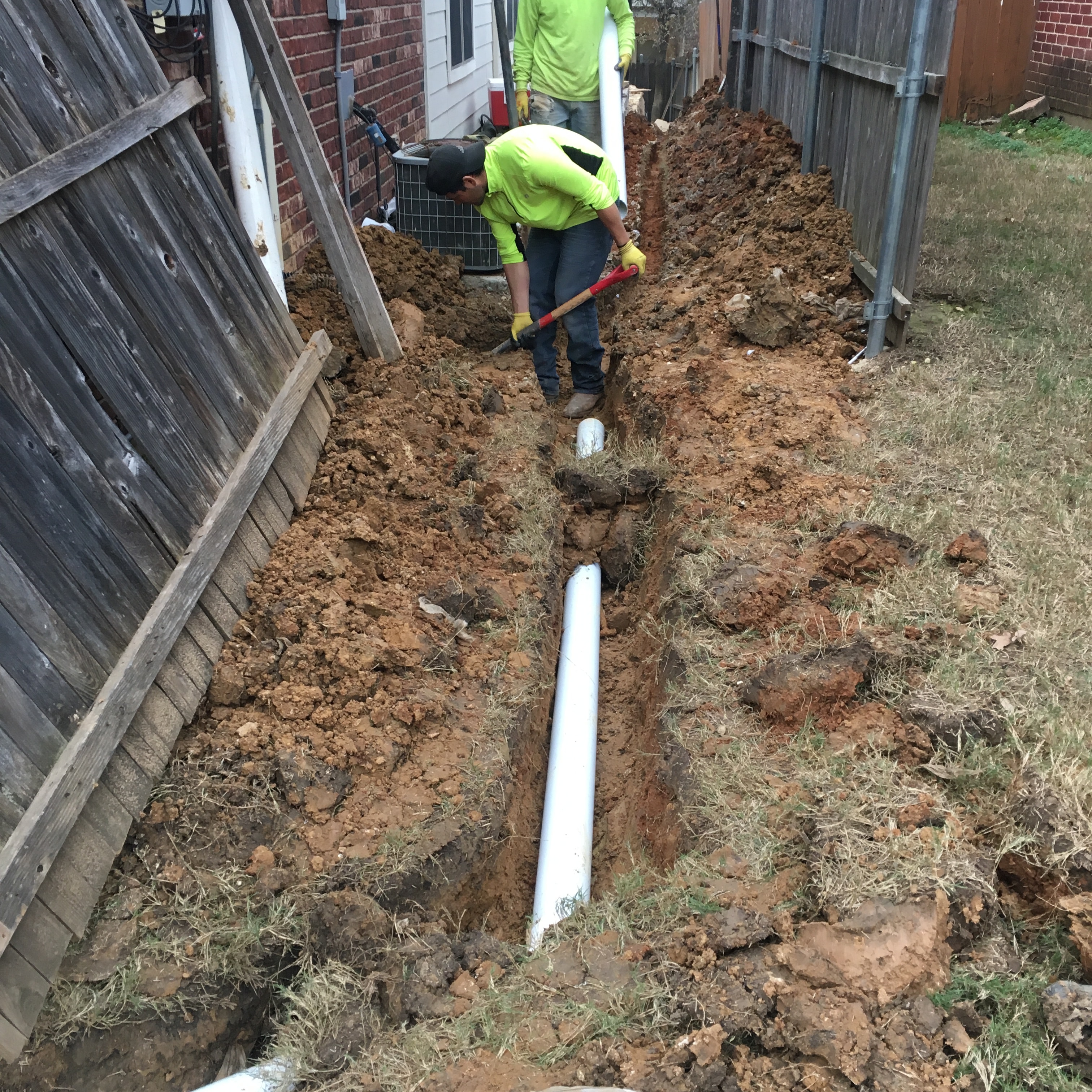
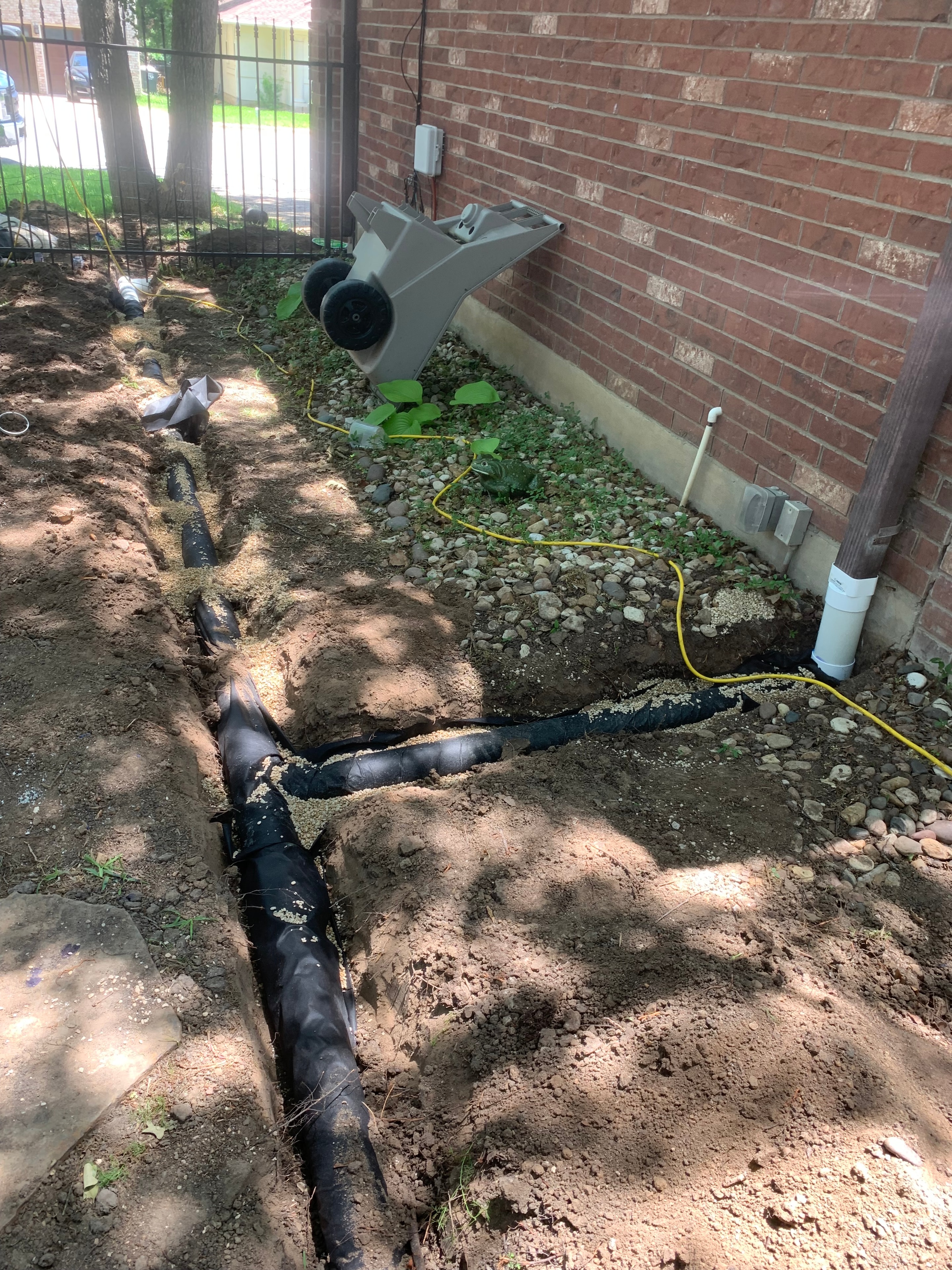
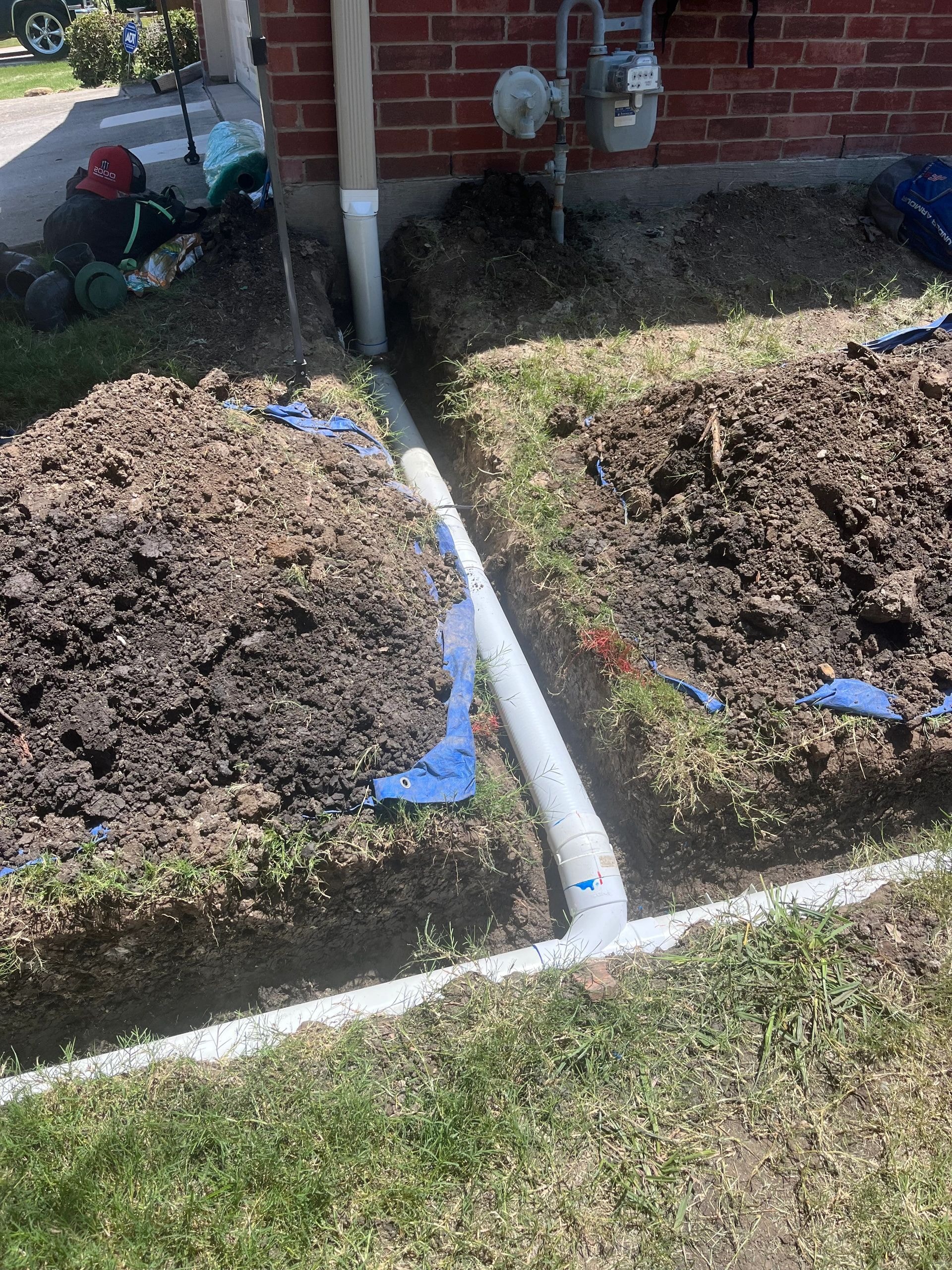
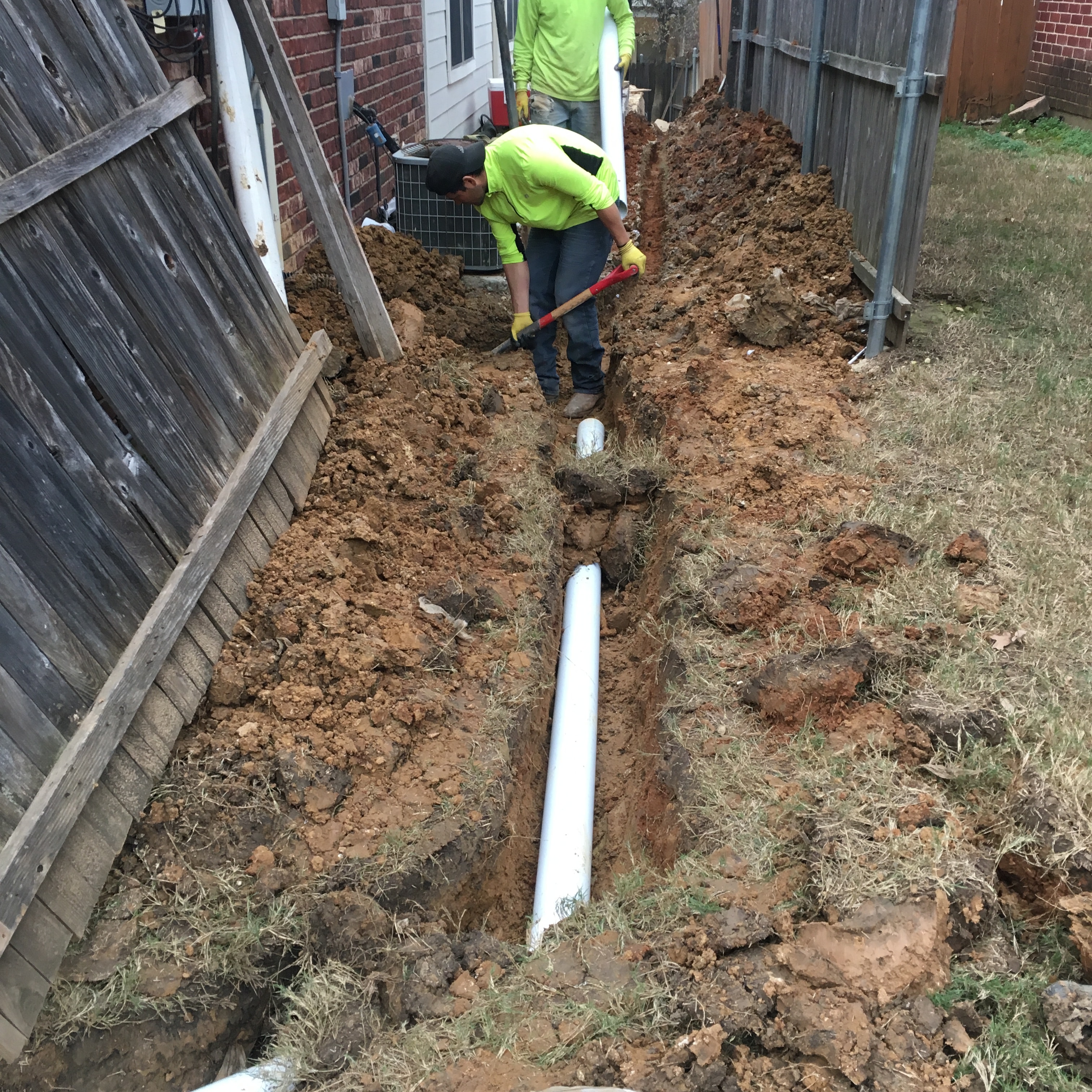
A perforated pipe set in a gravel-filled trench intercepts subsurface water before it reaches the foundation and channels it to a safe discharge point at the property edge or street.
Best for
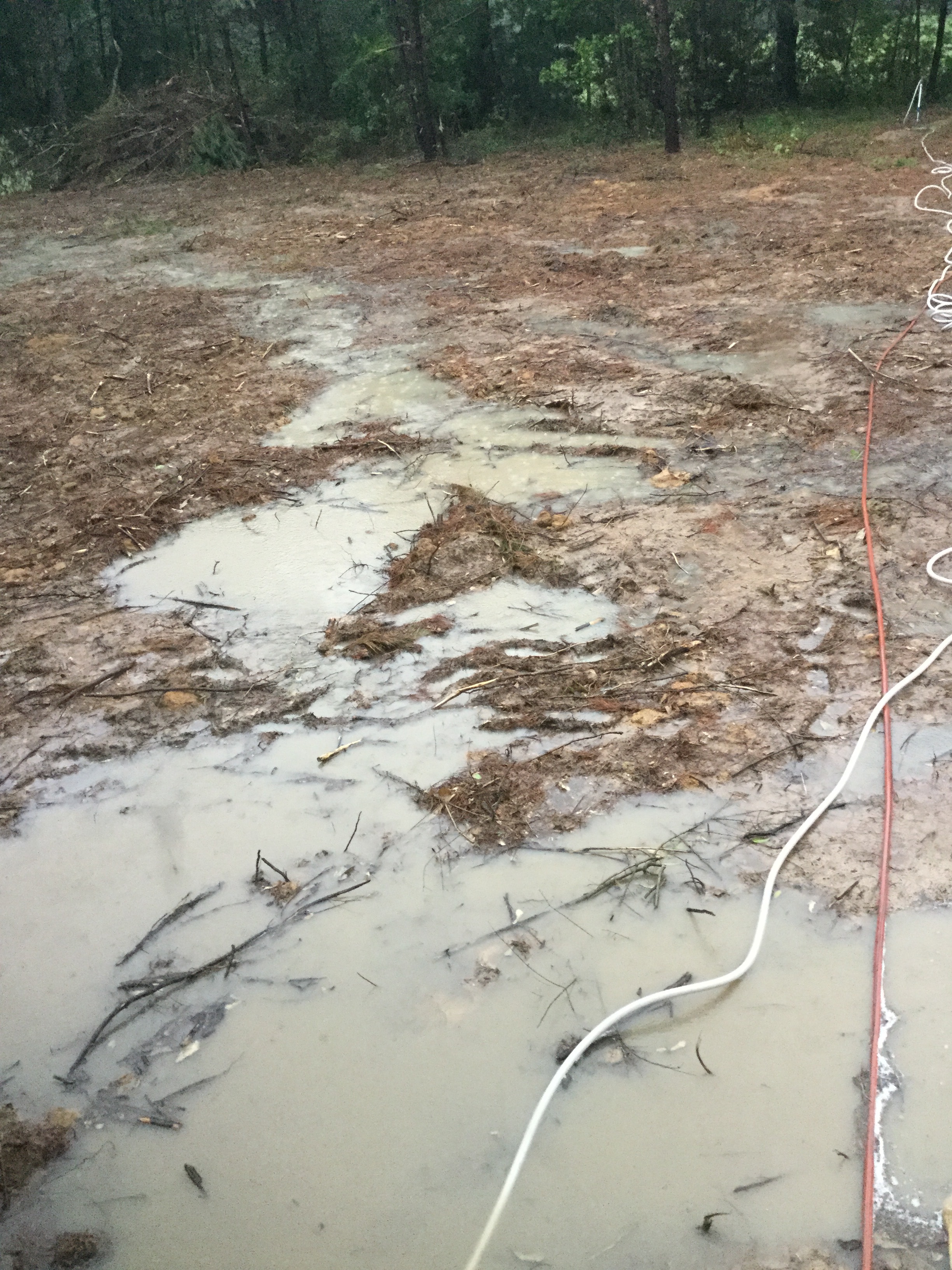
Yards with persistent wet spots, slow-draining soil, or water pooling after rain
Surface Regrading
We regrade the soil around your home so the ground slopes away from the foundation at the correct pitch — typically 6 inches of drop over the first 10 feet — preventing water from flowing toward the structure.
Best for
Homes where the yard has settled flat or slopes toward the house
Channel Drains & Trench Drains
Linear channel drains installed across driveways, patios, and hardscaped areas capture sheet flow before it reaches the foundation or garage, directing it to a piped outlet.
Best for
Driveways, patios, and paved areas that funnel water toward the structure
Catch Basin Installation
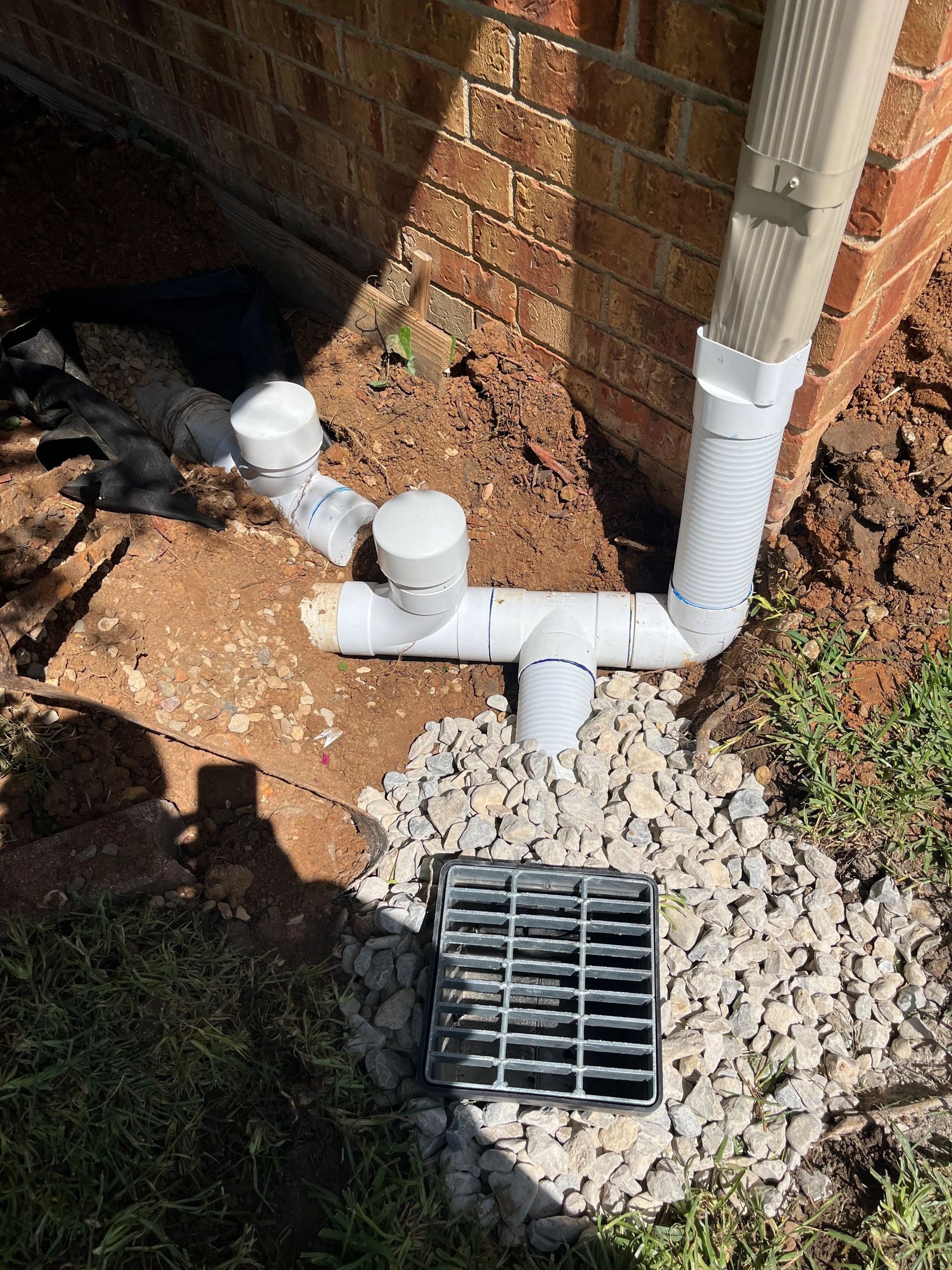
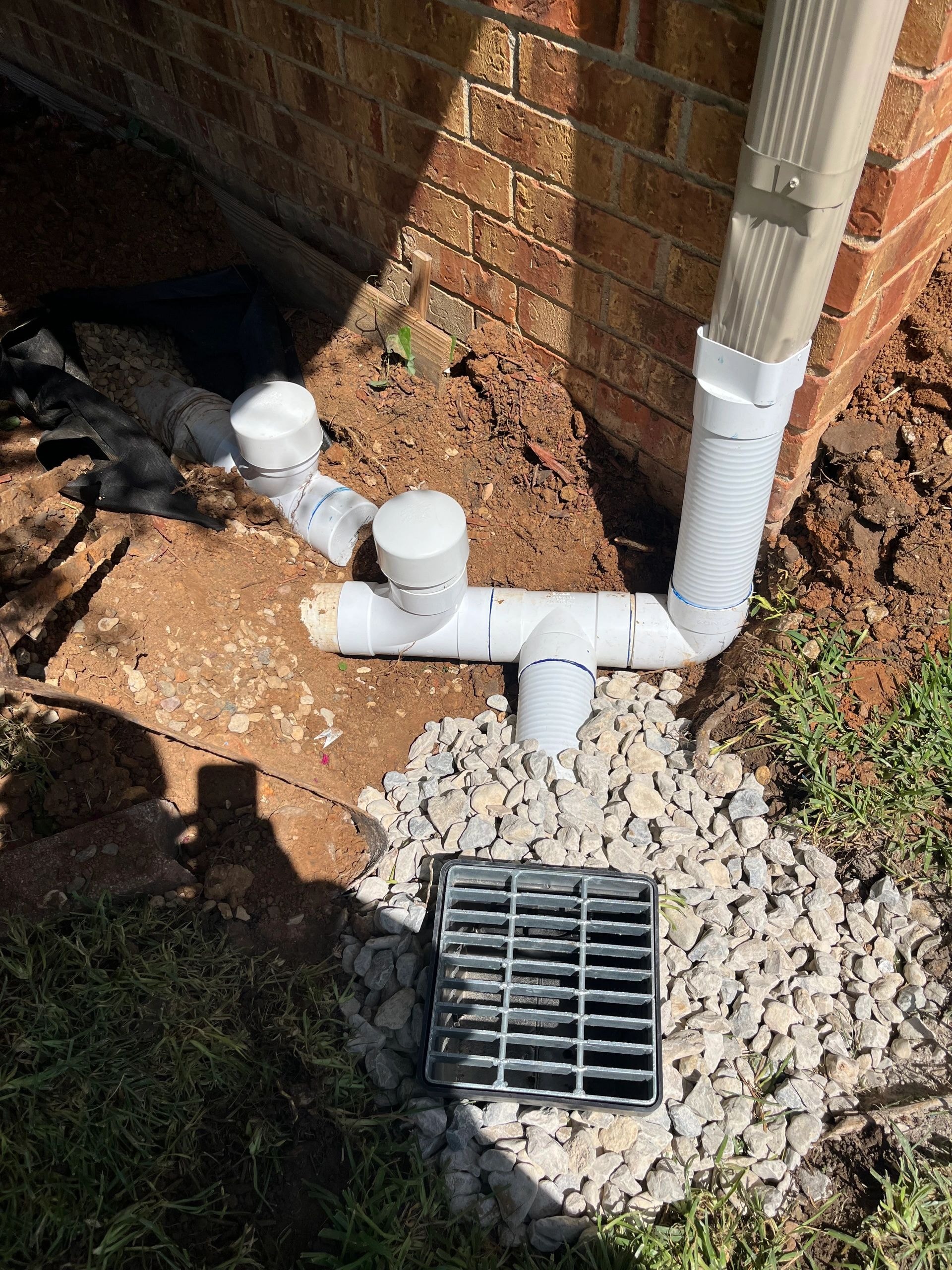
Catch basins collect surface water at low points in the yard and connect to underground drainage pipe that carries water away from the property. Grates prevent debris from entering the system.
Best for
Yards with a single low point where water consistently pools
Downspout Extensions & Drainage
Gutters that discharge too close to the foundation are one of the most common causes of foundation damage in DFW. We extend downspouts underground or above grade to discharge water at least 10 feet from the structure.
Best for
Homes where downspouts terminate at the foundation or within 5 feet of it
Sump Pump Systems
For crawlspaces and low-lying areas that collect water despite surface drainage improvements, a sump pump provides active water removal. We install complete systems including the pit, pump, and discharge line.
Best for
Crawlspaces with standing water or properties in low-lying areas


Our Drainage Assessment Process
Site Walk & Water Mapping
We walk the entire property and identify every point where water enters, pools, or flows toward the structure.
Grade & Slope Analysis
We measure existing grades and identify areas where the ground slopes toward the foundation or holds water.
Gutter & Downspout Review
We inspect gutters, downspouts, and discharge points to identify overflows and inadequate extensions.
System Design
We design a drainage solution sized for your property's actual runoff volume — not a generic one-size-fits-all approach.
Installation & Verification
We install the system, verify flow at all outlets, and walk you through the maintenance steps to keep it performing.
Homeowner Maintenance Guide
Drainage Maintenance Homeowners Can Do Themselves
A well-designed drainage system lasts for decades — but only if it's maintained. These are the tasks every DFW homeowner should perform regularly to keep drainage pipes, catch basins, and gutters flowing freely.
Catch Basin & Drainage Pipe Maintenance
Catch basins and underground drainage pipes are the workhorses of your yard drainage system. Leaves, silt, and debris accumulate over time and restrict flow — often without any visible sign until a heavy rain overwhelms the system. Regular maintenance prevents blockages and extends the life of your drainage investment.
Clear Catch Basin Grates — Every Season
Remove the grate and pull out any leaves, mulch, sediment, or debris that has collected in the basin. A clogged grate is the most common cause of catch basin overflow. This takes five minutes and should be done at least four times a year — especially before spring rains and after fall leaf drop.
Flush Drainage Pipes Annually
Once a year, run a garden hose at full pressure into each catch basin inlet and watch for flow at the outlet. If water backs up or drains slowly, the pipe has a partial blockage. A plumber's snake or a rented drain jetter can clear most residential drainage pipe blockages without excavation.
Inspect Outlets After Heavy Rain
After any significant rain event, walk your property and confirm that water is discharging from all drainage outlets. A pipe that shows no flow during rain indicates a blockage or collapse upstream. Catching this early prevents the backup from saturating soil near your foundation.
Check for Settled or Sunken Grates
Catch basin grates that have settled below grade collect more debris and can become a trip hazard. If a grate has sunk more than an inch below the surrounding surface, the basin may need to be raised — a straightforward repair that prevents long-term drainage problems.
Keep Mulch and Soil Away from Inlets
Landscaping mulch is one of the fastest ways to clog a catch basin. Keep mulch beds at least 6 inches away from any drainage inlet, and re-check after wind events or heavy rain that can shift mulch toward the grate.
Mark Pipe Locations Before Digging
Know where your underground drainage pipes run before any landscaping, fence installation, or planting project. Accidentally cutting a drainage pipe with a shovel or auger is a common and avoidable problem. Sketch the pipe layout when the system is installed and keep it with your home records.

Gutter Maintenance — Your First Line of Defense
Gutters and downspouts are the most overlooked part of a home's drainage system — and the most directly connected to foundation health. A clogged gutter overflows at the roofline and dumps concentrated water directly against the foundation. In DFW, where a single storm can deliver 2–3 inches of rain in an hour, a blocked gutter can saturate the soil around your foundation faster than any other single failure point.
Clean Gutters Twice a Year — Minimum
Clear gutters of leaves, shingle grit, and debris in late spring (after tree pollen and seed pods drop) and in late fall (after leaves have fallen). In DFW's tree-heavy neighborhoods — especially those with live oaks and pecans — quarterly cleaning is more realistic. A clogged gutter is a direct path to foundation damage.
Check Gutter Slope and Sag
Gutters should slope toward the downspout at roughly 1/4 inch per 10 feet. A sagging section holds standing water, breeds mosquitoes, and eventually pulls the gutter away from the fascia. Press on any section that looks low — if it flexes significantly, the hanger has failed and needs replacement.
Inspect Downspout Connections
Downspout sections can separate at the joints, especially after temperature swings. A disconnected joint dumps water behind the gutter and down the exterior wall directly against the foundation. Check every joint by hand and reseal or reconnect any that have separated.
Extend Downspouts at Least 6 Feet from the Foundation
The standard 6-inch splash block is not sufficient for DFW's clay soils. Downspout water should discharge at least 6 feet from the foundation — 10 feet is better. Flexible downspout extenders cost under $20 at any hardware store and are one of the highest-return investments a homeowner can make in foundation protection.
Check for Leaks at Seams and End Caps
Gutter seams and end caps are the most common leak points. A leaking seam drips water along the fascia and soffit, eventually rotting the wood and directing water toward the foundation. Inspect seams from the ground after rain and reseal any that show water staining on the exterior wall below.
Consider Gutter Guards for High-Debris Areas
If your property has significant tree coverage — particularly live oaks, pecans, or cedar elms — gutter guards can dramatically reduce cleaning frequency. Micro-mesh guards are the most effective at keeping debris out while allowing water flow. Avoid foam inserts, which trap debris and deteriorate quickly in DFW's heat.

When Maintenance Isn't Enough — Call Us
Regular maintenance keeps a properly designed system flowing. But if you are cleaning your gutters and catch basins regularly and still seeing water pool near your foundation, the system itself may be undersized, incorrectly graded, or damaged. That is when a professional drainage assessment is the right next step.
- Water pools within 5 feet of the foundation after rain despite clear gutters and catch basins
- Drainage outlets show little or no flow during or after rain events
- Catch basin grates are clear but the basin fills to the top before draining
- Downspouts are extended but the soil near the foundation stays wet for days after rain
- You notice new cracks in drywall, sticking doors, or uneven floors after wet seasons
Drainage Correction — Common Questions
Stop Water Before It Reaches Your Foundation
If water is pooling near your home, your gutters are overflowing, or you have noticed signs of foundation movement after wet weather, call us for a free drainage assessment. We will walk your property, identify every problem point, and give you a clear, honest recommendation.
Get a Free Assessment